
eChassis — an electric platform for specialised passenger-transport bodies
eChassis

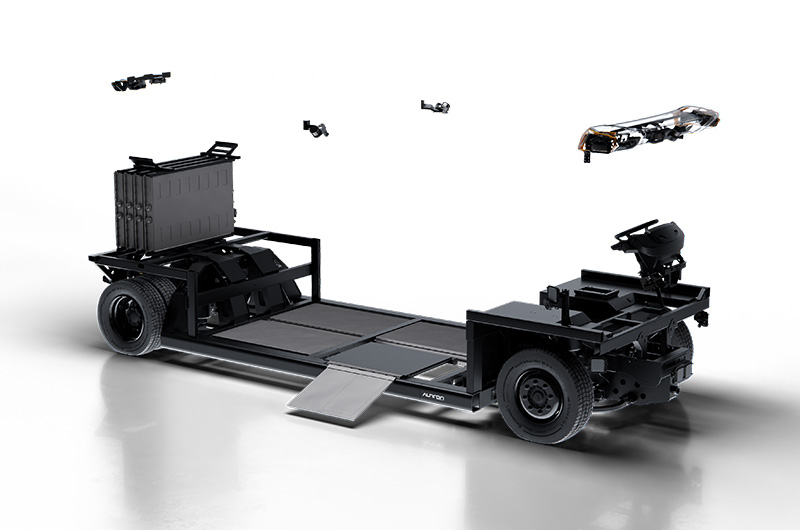
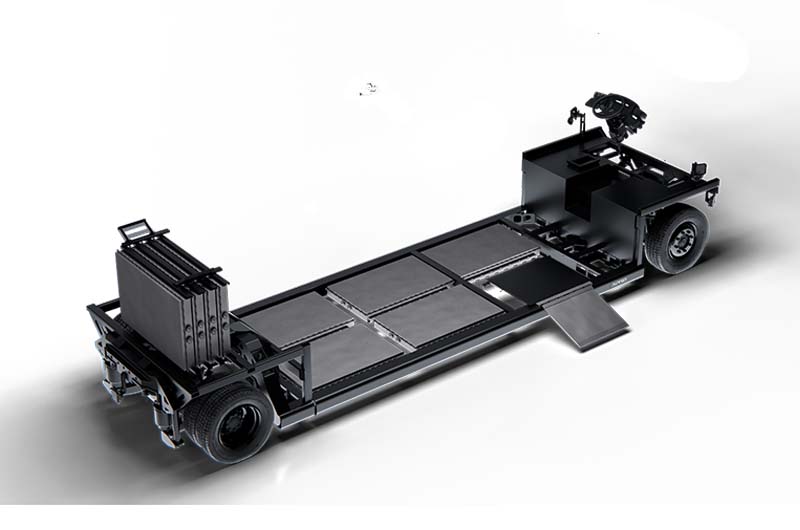
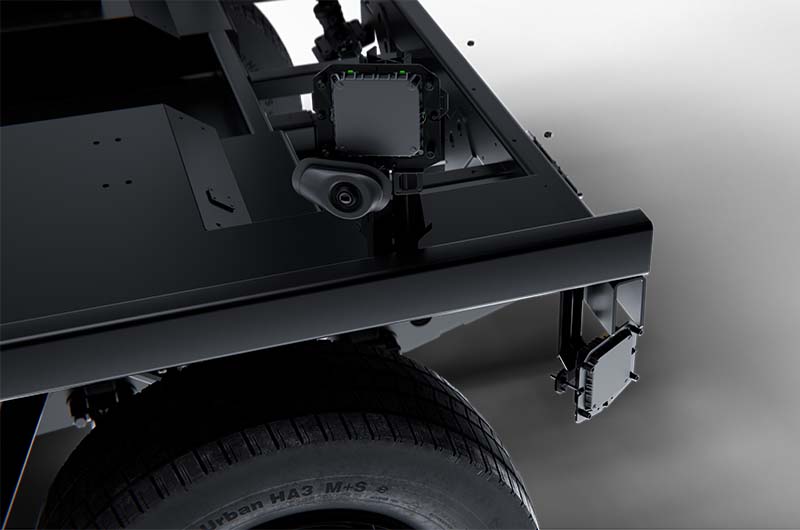
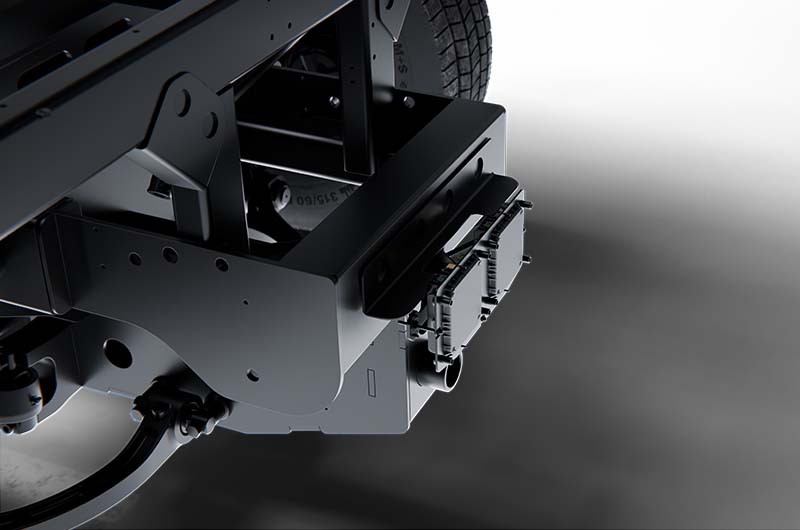
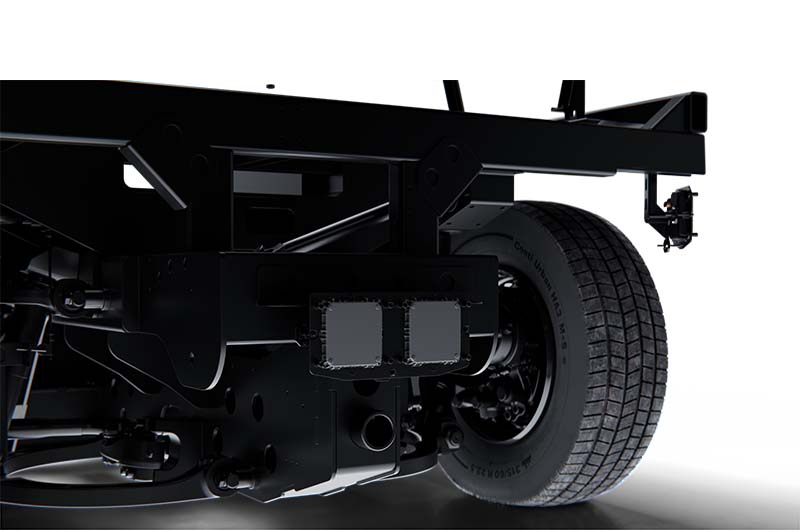
Integrated electric drivetrain and E/E architecture
The eChassis is an electric vehicle platform that eVersum supplies to bodybuilders and vehicle integrators for specialised passenger-transport bodies. It is offered for project-specific programmes rather than as a catalogue product: each platform is engineered against a defined body concept, duty cycle and approval route.
The platform provides the complete electric propulsion and electrical/electronic backbone of the vehicle:
- Electric drive unit, transmission interface, high-voltage distribution and thermal management as a pre-engineered, validated assembly.
- Modular traction battery configurations with the associated battery-management system, charging interface and AC/DC charging strategy defined per project.
- Vehicle E/E architecture with embedded vehicle control, CAN-based communication, power distribution, diagnostics and defined software interfaces for body functions.
- Chassis structure, axles, steering, braking and suspension packaged around the electric driveline, with documented mechanical and electrical interfaces towards the superstructure.
- Service, diagnostic and spare-parts documentation for the platform scope.
The result is a defined, tested basis for electric propulsion, so that the body partner does not have to develop an electric driveline or E/E architecture in-house. Technical data is released per programme and confirmed in writing before order.
Configurable wheelbase and interface scope
Configuration is offered within an approved option set. Options outside that set are treated as engineering work and require a feasibility assessment before they can be confirmed.
- Wheelbase and length: selectable within the released wheelbase range of the platform. The available range and the corresponding axle loads are confirmed per programme.
- Battery capacity: selectable from the approved modular battery configurations, matched to the required daily range and charging window.
- Charging: AC and DC charging options from the released variants, including connector position and charging power.
- Body interface: defined mounting points, floor height, load paths and permissible body mass and centre-of-gravity envelope.
- Electrical interface: documented connector set, signal list, power budget and control interfaces for doors, HVAC, lighting, ramps and passenger-information systems.
- Driver environment: steering column, pedal and dashboard interface positions from the released configurations.
Every configuration is fixed in a project-specific interface specification. That document, not this page, is the binding technical reference.
Responsibilities
A body-on-platform programme only works when the split of responsibility is agreed in writing at the start. The final vehicle is a joint result, not a hand-over.
Retained by eVersum
- Design, production and validation of the platform scope: chassis, electric drivetrain, high-voltage system, battery integration, charging and E/E architecture.
- Embedded vehicle control software, diagnostics and platform-level functional safety and cybersecurity concept.
- Interface specification, permissible load and mass envelope, and platform documentation.
- Engineering support during body integration and platform-side evidence for the vehicle approval file.
Responsibility of the bodybuilder
- Design, structural verification and manufacture of the superstructure within the specified interface, mass and centre-of-gravity limits.
- Body systems and their correct connection to the platform interfaces: doors, HVAC, interior, lighting, ramps and passenger-information systems.
- Body-side production quality, corrosion protection and assembly process.
- Body-related evidence and documentation required for the approval of the complete vehicle.
Joint responsibility
- Final vehicle integration, including the interaction of body systems with the vehicle control and power architecture.
- The vehicle-level safety concept, test programme and approval strategy.
- Homologation of the complete vehicle and the allocation of manufacturer responsibility, agreed contractually before the programme starts.
The platform removes electric-driveline development from the body partner's scope. It does not remove vehicle integration, homologation or product responsibility: those require joint engineering and a contractual allocation of roles.
Engineering, integration, compliance and validation
Programmes follow a staged process with defined deliverables and decision gates at each step.
- 1. Feasibility and concept. Body concept, duty cycle, passenger capacity, target market and approval route are reviewed against the platform option set. Output: configuration proposal, open points and indicative timeline.
- 2. Interface definition. Mechanical, electrical and software interfaces, mass and centre-of-gravity limits and load cases are fixed in a project interface specification signed by both parties.
- 3. Integration engineering. Joint design reviews, packaging, cable and coolant routing, control-function allocation and diagnostics coverage for the combined vehicle.
- 4. Compliance planning. The applicable regulatory framework and approval route are identified together with the technical service, and the evidence plan is allocated between platform and body scope.
- 5. Validation. Platform-level and vehicle-level testing: high-voltage safety, electromagnetic compatibility, braking and steering function, durability and cold- and hot-condition checks, according to the agreed test plan.
- 6. Approval and series release. Submission of the approval file, correction of findings, release of the production configuration and definition of the change-control process for the running programme.
Approval scope, applicable regulations and validation extent are always project-specific and are confirmed with the responsible authority or technical service. Nothing on this page constitutes an approval statement for a complete vehicle.
Target applications
The platform is intended for passenger-transport bodies and closely related specialised vehicles.
- Shuttle and bus bodies. Low-floor and low-entry city, campus, airport and hotel shuttle bodies where accessibility, door layout and passenger flow are defined by the operator.
- Regional and tourism coach-style bodies. Seated configurations for defined routes and predictable daily distances.
- Selected specialised vehicles. Mobile service, medical, inspection, exhibition and comparable bodies with a passenger or crew compartment, assessed case by case against the platform envelope.
Applications with duty cycles, load cases or approval routes outside the released platform envelope are reviewed individually and only confirmed after a feasibility assessment.

